
Home › Utility Bill Learning Center › What Does a Utility Bill Look Like?
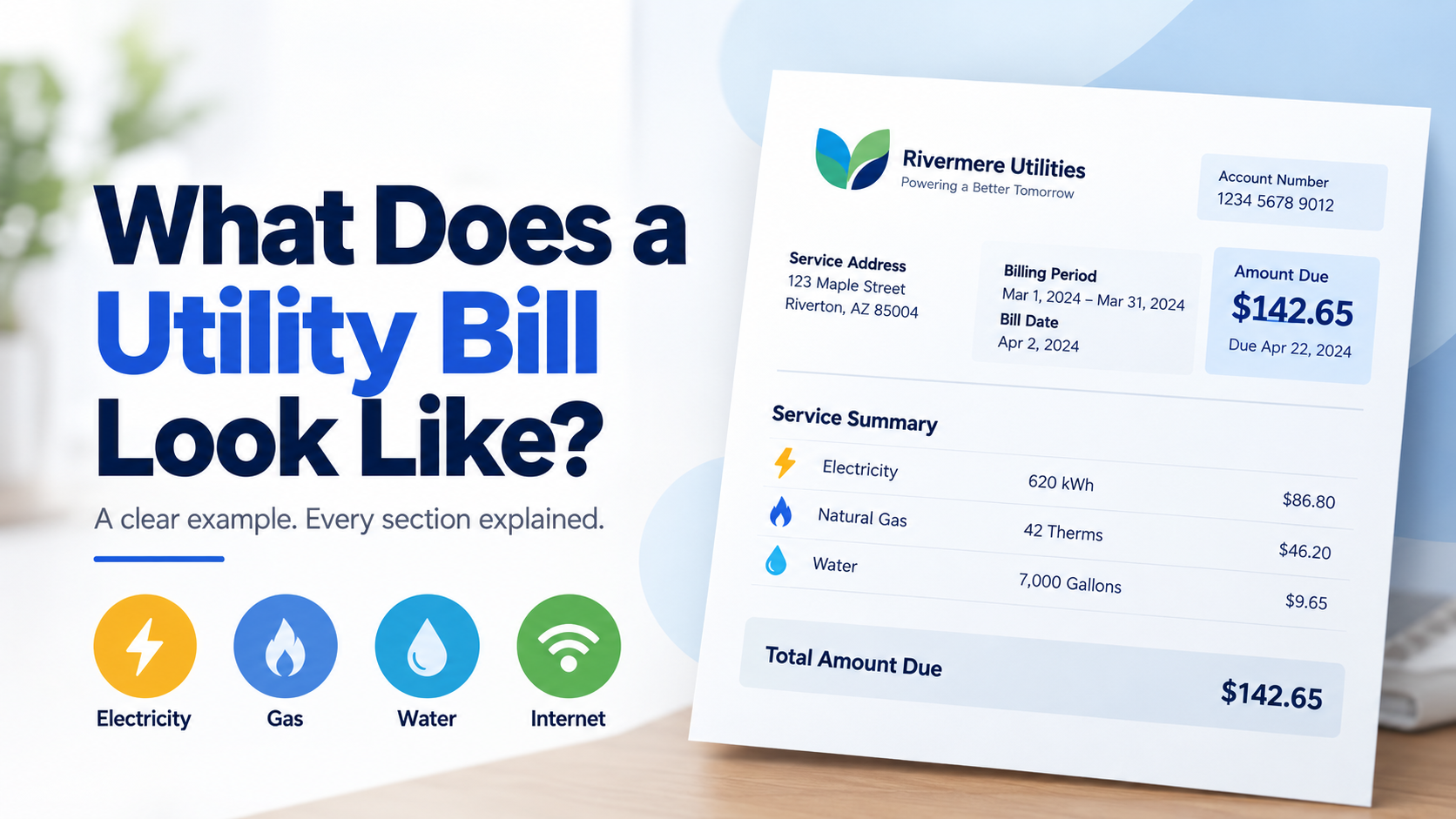
A utility bill usually shows the provider and account information near the top, the billing period and usage or service details in the middle, itemized charges below, and the amount due and payment deadline in a prominent summary.
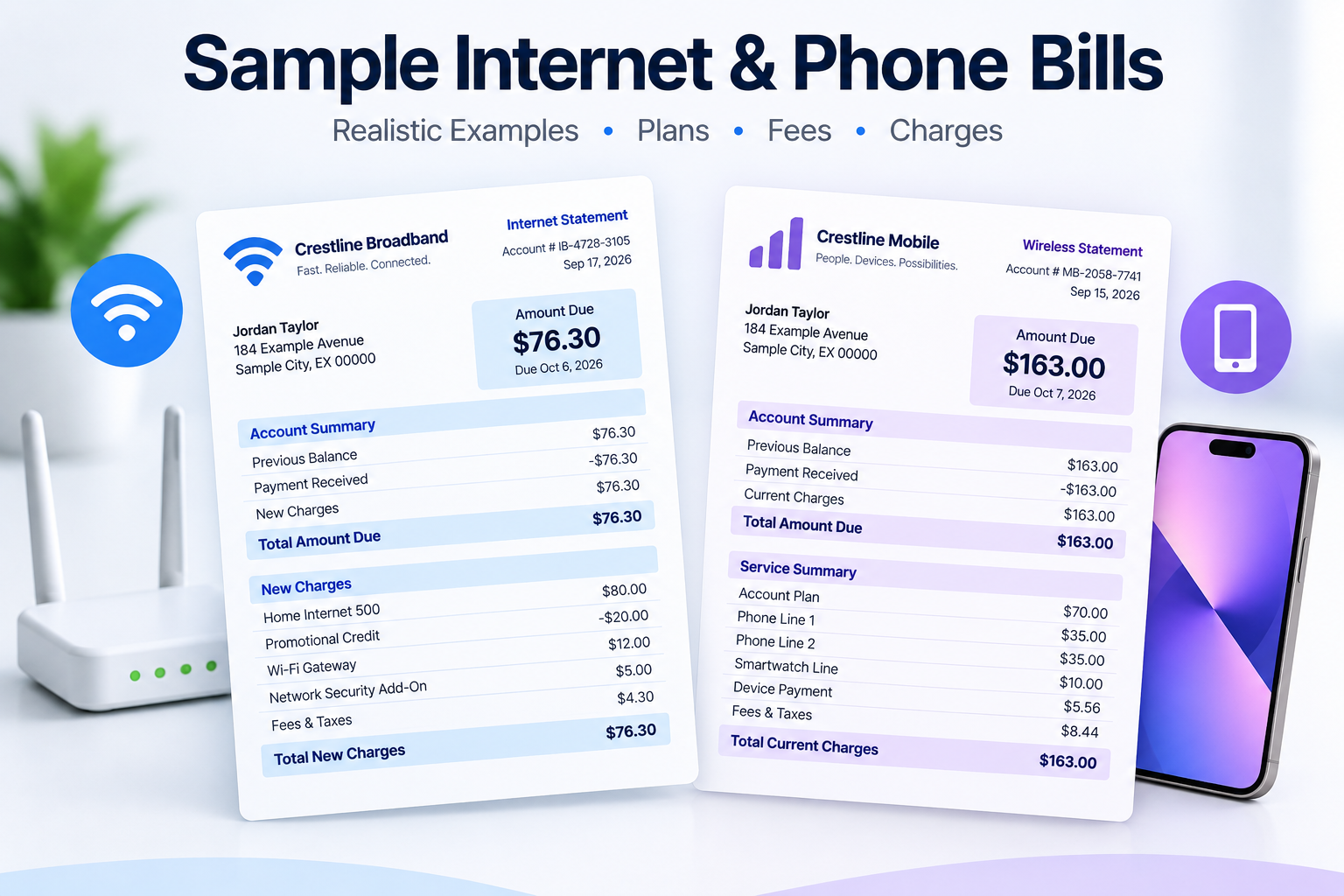
Electricity, gas and water bills may also show meter readings and consumption history. Internet and mobile statements usually show service plans, equipment and add-ons instead of utility-meter information.
The exact appearance changes from one provider to another, but most utility statements answer the same basic questions: which account is being billed, what service period is covered, how much service was used or provided, how the charges were calculated and how much is currently due.
If you first need the broader definition of a utility bill and which household services count as utilities, read What Is a Utility Bill? Types, Examples & How It Works.
What Does a Utility Bill Look Like?
A typical residential utility statement often begins with the provider name and account summary. The amount due may appear in the top-right corner or another visually prominent area. The body of the statement then explains the billing period, usage, meter information and individual charges.
The simplified fictional statement below shows how these sections fit together.
Utility Bill Anatomy at a Glance
If you want to compare these sections with a fictional statement, the online utility bill generator provides a practical way to see common bill fields, balances, usage and charges together.
Instead of memorizing one provider's design, divide a utility bill into five functional areas.
| Area | Common Information | Question It Answers |
|---|---|---|
| Account identification | Name, account number, service address | Whose account is this? |
| Billing information | Statement date, billing period, previous balance | What time period is being billed? |
| Usage or service details | Meter readings, consumption or plan details | What service was supplied? |
| Charges | Usage, supply, delivery, fixed charges, fees | How was the amount calculated? |
| Payment summary | Amount due, due date and payment information | What needs to be paid? |
1. Provider Information
The provider name is normally one of the first things visible on a utility statement. Contact information may appear nearby or in a dedicated customer-service area.
Depending on the service, this section can include:
- utility or service-provider name;
- customer-service phone number;
- website or account portal;
- mailing address;
- emergency or outage contact details.
Provider information becomes particularly important when the statement separates different parts of a service. An energy bill, for example, can distinguish between the company supplying energy and charges associated with delivering it.
2. Customer, Account Number and Service Address
Utility statements normally identify the customer or account holder and include an account number used by the provider to manage the service relationship.
The service address identifies where the service is supplied. This can differ from the mailing address, particularly for landlords, businesses, property managers and customers who receive correspondence somewhere other than the serviced property.
3. Statement Date, Billing Period and Due Date
For a deeper explanation of account number, billing period, previous balance, payments, credits, current charges, amount due and due date, see our utility bill account summary guide.
Three different dates can appear on the same utility bill.
| Date | What It Means |
|---|---|
| Statement date | The date the provider created or issued the current statement. |
| Billing period | The beginning and ending dates associated with the current service period. |
| Due date | The payment deadline shown for the current account balance. |
A billing cycle does not necessarily cover exactly 30 days. When comparing two bills, first check whether the billing periods contain the same number of days.
4. Previous Balance, Payments and Credits
Before showing the new total, many utility statements explain what happened to the balance from the previous billing cycle.
Credits can include payments, account corrections, discounts, assistance credits or other adjustments depending on the provider.
5. Meter Readings
Many metered utilities also show a meter number or meter ID near the previous and current readings. This identifies the specific meter associated with the service location and helps distinguish multiple meters on one account.
Electricity, natural gas and water are commonly metered services. Their bills may show both a previous meter reading and a current reading.
In the fictional electricity example:
The statement may also indicate whether a meter reading was actual, estimated or obtained automatically.
6. Usage and Measurement Units
Usage tells the customer how much metered service was recorded during the billing period.
| Service | Common Usage Information |
|---|---|
| Electricity | Kilowatt-hours (kWh) |
| Natural gas | Therms, CCF or another provider-specific measurement |
| Water | Gallons, cubic feet or CCF |
| Internet / Wi-Fi | Usually a service plan rather than a physical utility meter |
This is one of the biggest differences between traditional utilities and subscription-based household services. Electricity, gas and water often calculate part of the bill from measured consumption, while internet and mobile services usually begin with a recurring plan.
7. Rates and Itemized Charges
Depending on the service, itemized charges may include supply, generation, transmission, delivery, distribution, customer charges, taxes, fees and adjustments. See how utility bills are calculated for the math behind these line items, and use our utility bill terms and abbreviations guide for unfamiliar labels.
The itemized-charge section explains why the final amount is what it is.
A simple fictional electricity calculation might be:
Real statements may contain several additional components.
| Charge | What It Can Represent |
|---|---|
| Usage charge | A charge tied to measured consumption. |
| Supply charge | The cost associated with the energy or commodity supplied where this structure applies. |
| Delivery / distribution | Charges associated with delivering the service through utility infrastructure. |
| Customer / fixed charge | A recurring charge that may apply regardless of usage. |
| Taxes and fees | Applicable government, regulatory or provider-specific charges. |
| Credits and adjustments | Corrections, discounts or other account changes. |
8. Amount Due and Payment Information
Paper statements may also include a detachable payment stub or remittance section. This area can repeat the account number, amount due, due date and payment address so the customer can return the correct information with a mailed payment.
The amount due is normally one of the most prominent figures on the statement.
It can include:
- current service charges;
- previous unpaid balances;
- fixed charges;
- taxes or fees;
- account adjustments;
- less payments and credits already applied.
The statement usually places the due date close to the amount due so both pieces of information can be identified quickly.
9. Usage History and Comparison Charts
Electricity, water and gas statements often include historical consumption so customers can compare the current billing period with earlier periods.
A higher total does not automatically mean the utility increased its rates. The difference can also come from greater usage, a longer billing cycle, seasonal conditions, fixed charges or changes in credits.
When investigating a change, compare:
- current usage;
- previous-period usage;
- the same period in the previous year when available;
- billing-period length;
- rate changes;
- new fees or credits.
How Different Utility Bills Look
Electricity statements commonly emphasize kWh usage, meter readings, rate plans and supply or delivery charges. Compare the layout with our annotated sample electricity bill, electricity bill reading guide and electricity bill charges explained.
The top and bottom of different utility statements can look surprisingly similar because most need account and payment information. The middle section changes according to the service being billed.
| Feature | Electricity | Gas | Water | Internet |
|---|---|---|---|---|
| Meter reading | Common | Common | Common | Usually no |
| Typical unit | kWh | Therms / CCF / provider unit | Gallons / CCF / cubic feet | Plan-based |
| Usage-based charge | Common | Common | Common | Usually not the primary charge |
| Delivery / infrastructure | May appear | May appear | Terminology varies | Usually not shown this way |
| Equipment charges | Uncommon | Uncommon | Uncommon | Common |
| Usage history | Common | Common | Common | Varies |
Electricity bills
Electricity statements commonly emphasize kWh consumption, meter data and rate-based charges. They may also separate supply, delivery and customer charges depending on the utility and market.
Natural gas bills
Gas bills can show therms, CCF or another measurement and may distinguish the cost of gas from delivery, distribution or customer charges.
Water bills
Water statements often combine measured consumption with a base or service charge. Sewer, wastewater or stormwater charges may also appear depending on the local utility.
Internet and Wi-Fi bills
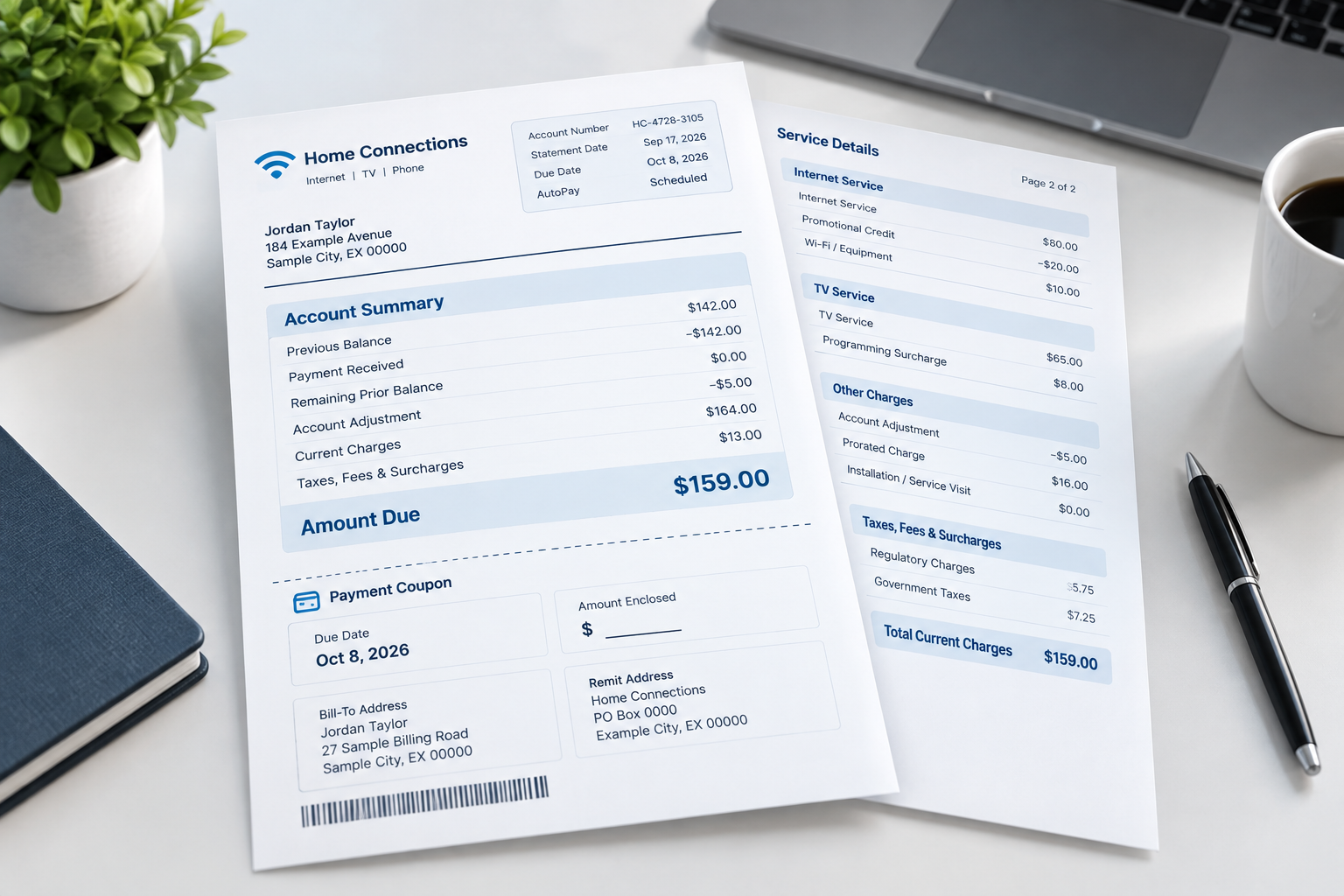
Internet statements generally focus on the service plan, equipment rental, additional services, promotional discounts and taxes or fees instead of meter readings.
A 6-Step Way to Read Any Utility Bill
Natural gas statements often show CCF, MCF or therms together with commodity, delivery and customer charges. For examples, see our annotated sample gas bill, gas bill reading guide and gas bill charges explained.
Real Provider Bills vs Fictional Utility Statements
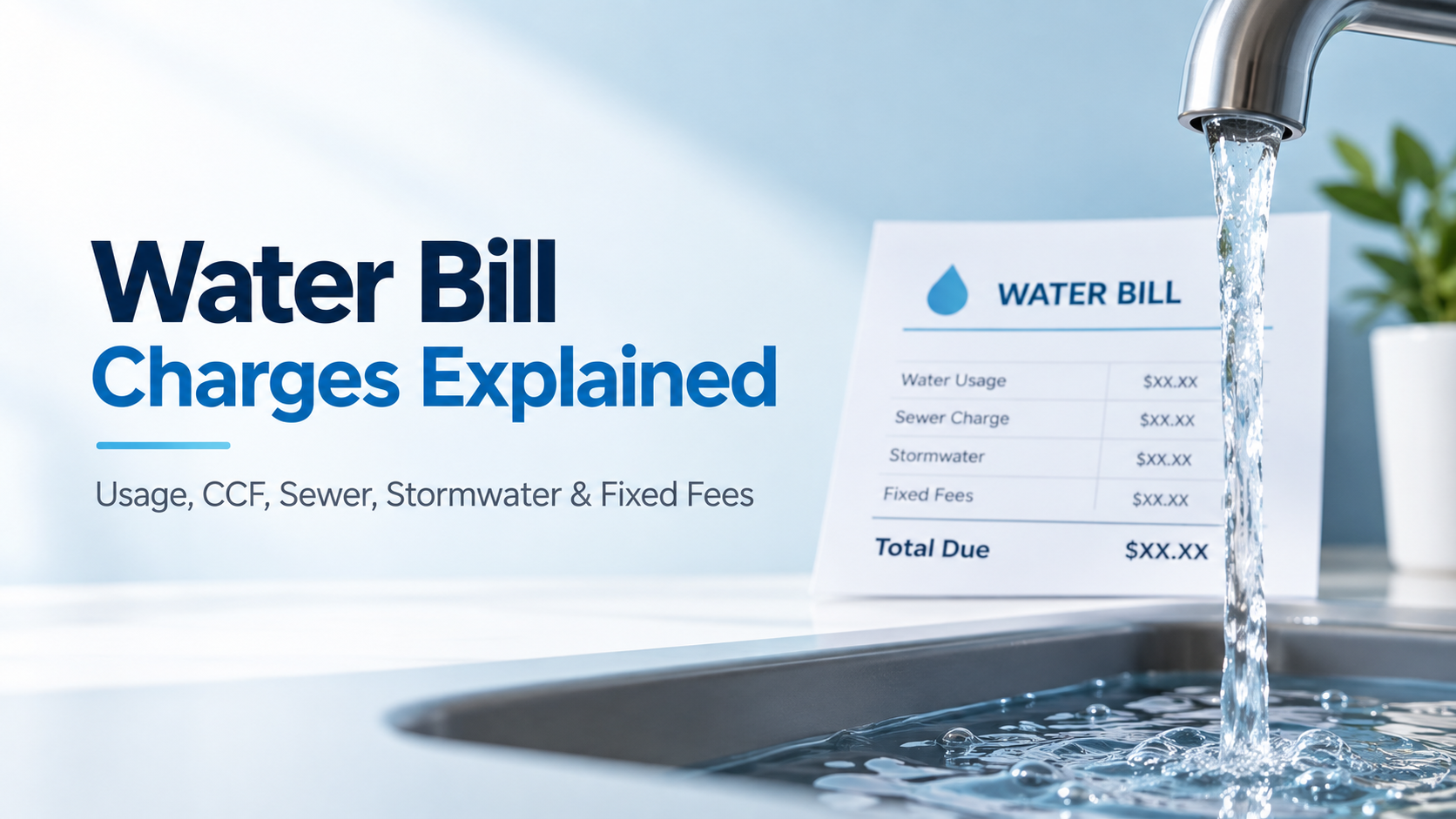
Water statements may use gallons, CCF or other volume units and can separate water, sewer, base and usage-based charges. See water bill charges explained for the common water-specific line items.
A real utility bill is issued by an actual service provider for a real account. It reflects real account activity, services, readings and charges.
A fictional statement uses synthetic information for education, software development, training or design situations where real customer information is not required.
| Document Type | Typical Purpose | Data | Provider-Issued? |
|---|---|---|---|
| Real utility statement | Actual customer billing | Real account information | Yes |
| Educational example | Explaining utility-bill anatomy | Fictional | No |
| Testing document | OCR, parsing, QA or software workflows | Synthetic | No |
| UI mockup | Product and interface design | Fictional | No |
Frequently Asked Questions
Most utility bills show provider and account information, a billing period, usage or service details, itemized charges, previous balances or credits, an amount due and a payment deadline. The exact layout varies by provider.
The top area commonly contains the utility name, account holder, account number, service address, statement date and an account or payment summary.
Common fields include customer information, account number, service address, statement date, billing period, usage or plan information, charges, previous balances, payments or credits, total amount due and due date.
No. Meter readings are most relevant to services such as electricity, gas and water. Internet, mobile and cable services usually use plan-based billing instead.
The statement date tells you when the bill was generated. The billing period identifies the service dates associated with the current charges.
The previous balance is an amount carried from the preceding billing cycle before payments, credits and current charges are applied.
Providers operate under different rate structures and use different terminology. Similar concepts may therefore appear under labels such as delivery, distribution, base charge, customer charge or service charge.
No. Electricity bills typically emphasize metered consumption, while internet bills usually emphasize the monthly plan, equipment, additional services, discounts and fees.
Need a Fictional Electricity Statement for a Project?
For a customizable fictional version of this structure, you can create a sample utility bill online from the main site.
UtilityBillGenerator.net can create customizable sample electricity statements for legitimate software testing, training, classroom exercises, demonstrations and UI/UX projects.
Explore the Electricity Bill GeneratorSources & Methodology
This guide uses a provider-neutral framework because there is no single utility-bill layout used throughout the United States.
The structure focuses on recurring elements found across utility statements: customer and account identification, service dates, meter or usage information, itemized charges, balances, credits and payment information.
Measurement and billing concepts should always be checked against the issuing provider when interpreting a real statement because utilities can use different units, tariffs, rate structures and terminology.
Crestline Utilities, Jordan Carter, the account number, service address, meter readings, rates and dollar amounts shown in this article are entirely fictional and were created for educational explanation.