
Home › Utility Bill Learning Center › What Is a Utility Bill?
A utility bill is a statement showing the cost of a household or business service such as electricity, natural gas or water during a specific billing period. It normally identifies the account, service location, billing dates, usage or service details, individual charges, previous balances or credits, the total amount due and a payment deadline.
Internet, phone and waste services are also commonly grouped with household utilities, although they do not always work like traditional metered electricity, gas and water services.
Utility bills are easy to recognize but harder to understand in detail because providers use different layouts, terminology and rate structures. The most useful way to understand them is to separate the bill into three questions:
- What service was provided?
- How was the charge calculated?
- How much is currently payable?
What Is a Utility Bill?
For a practical fictional example of these fields and utility types, the online utility bill generator provides a starting point for creating and reviewing customizable sample statements.
A utility bill is a billing statement issued for a service supplied to a home, apartment, business or other property.
Depending on the service, the statement may show:
- measured consumption;
- a recurring service plan;
- fixed account charges;
- delivery or infrastructure costs;
- taxes and fees;
- credits or previous balances;
- the current amount due.
The term is most directly associated with electricity, natural gas and water, but everyday household budgeting often groups internet, telephone, waste collection and similar recurring services under the broader utility category.
Common Types of Utility Bills
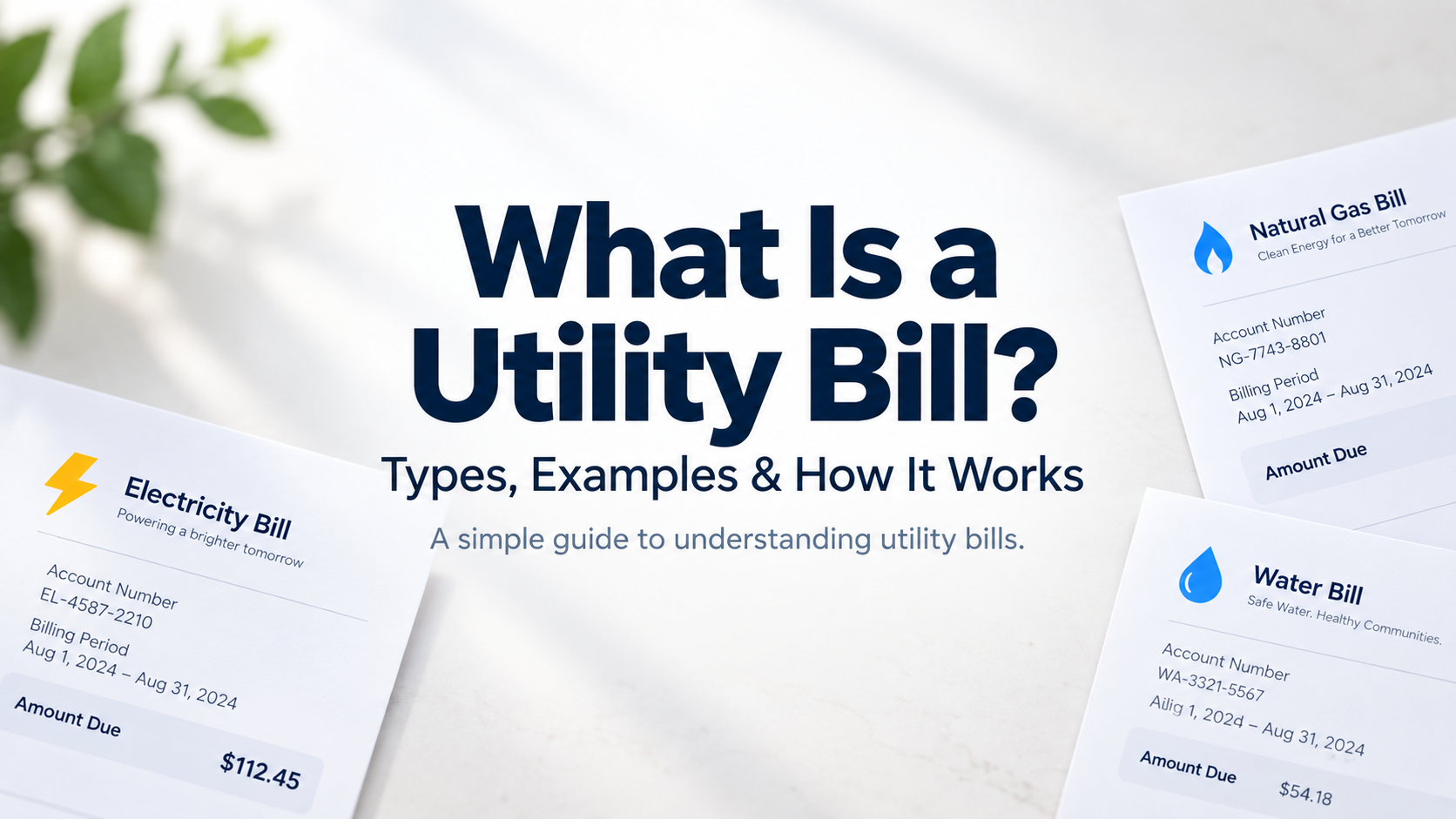
Each utility type uses a slightly different statement structure. For service-specific walkthroughs, see our guides on how to read an electricity bill, how to read a gas bill, how to read a water bill, how to read an internet bill and how to read a mobile phone bill.
Usually records electrical energy consumption in kilowatt-hours (kWh), along with rate-based, fixed and sometimes supply or delivery charges.
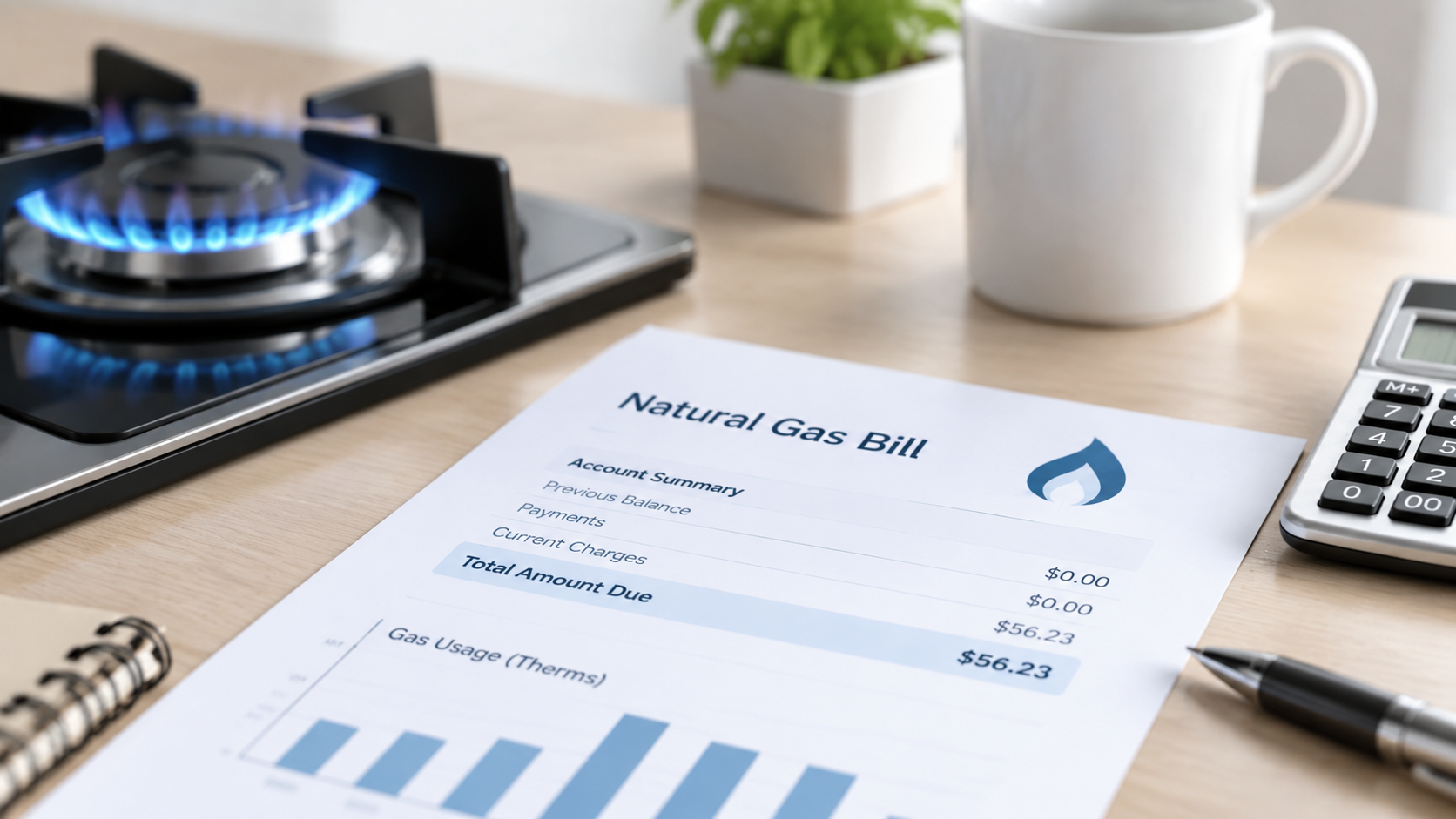
Can measure gas using therms, CCF or another applicable unit and may separate gas supply from delivery or customer charges.
Usually combines measured water consumption with fixed or base charges. Sewer, wastewater or stormwater charges can also appear.
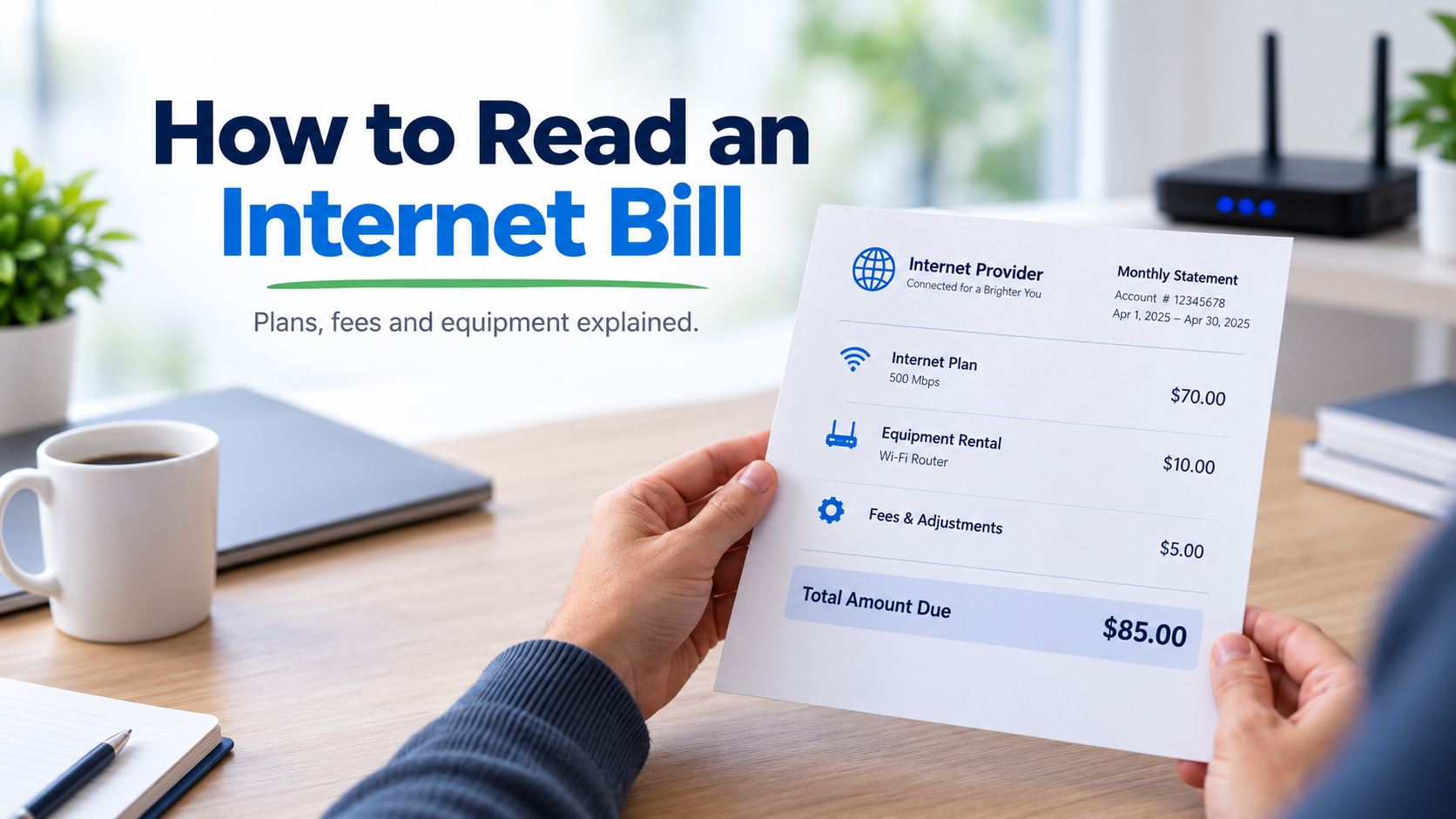
Typically uses plan-based billing and may include equipment rental, additional services, discounts and taxes or fees.
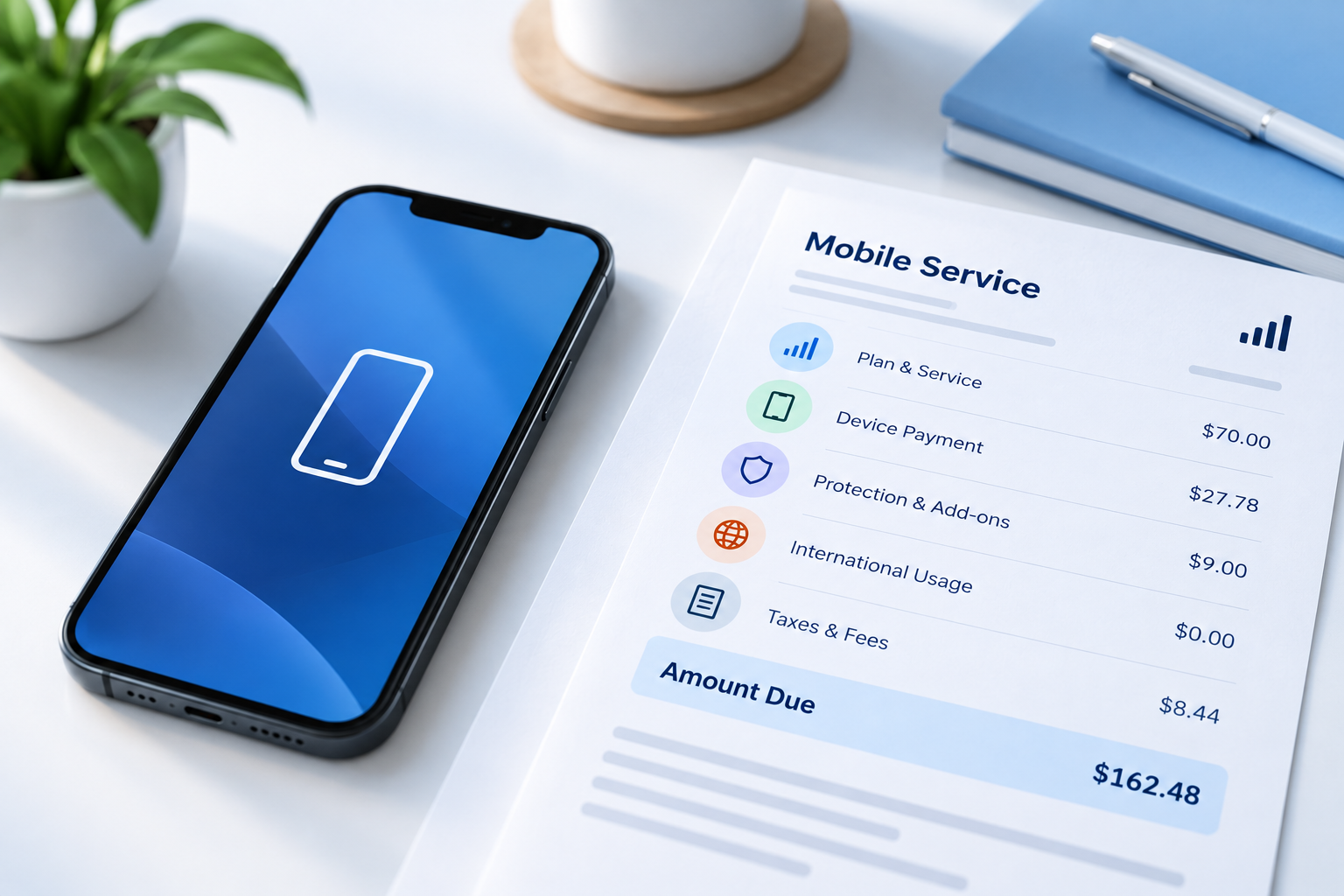
May include service plans, additional lines, device installments, data-related charges, discounts and taxes.
Some cities combine water, sewer, waste, stormwater or other municipal services into one statement.
What Counts as a Utility Bill?
The meaning of “utility” changes slightly depending on context.
| Service | Usually Considered a Utility? | How It Is Commonly Billed |
|---|---|---|
| Electricity | Yes | Metered usage plus applicable fixed and rate-based charges |
| Natural gas | Yes | Metered usage plus supply/delivery or fixed charges |
| Water | Yes | Metered or rate-based usage plus fixed/service charges |
| Sewer / wastewater | Usually | May be fixed, usage-related or tied partly to water consumption |
| Internet | Often grouped with household utilities | Subscription plan, equipment and additional services |
| Mobile phone | Sometimes grouped with utilities | Plan, lines, devices, usage and fees |
| Waste collection | Often | Recurring municipal or private-service fee |
| Rent | No | Housing payment rather than utility service |
| Streaming services | No | Entertainment subscription |
| Insurance | No | Insurance premium |
What Information Does a Utility Bill Include?
These identifying and billing fields are also why a recent utility statement may sometimes be requested as proof of address or proof of residence, although acceptance requirements vary by organization. For a deeper explanation of account number, billing period, balances, payments, amount due and due date, see our utility bill account summary guide.
Although the design differs between providers, most statements contain several recognizable information groups.
| Section | Typical Information |
|---|---|
| Provider information | Company or utility name, website and customer-service details |
| Account information | Customer name, account number and service location |
| Billing information | Statement date, billing period and due date |
| Usage or service details | Meter readings, consumption or subscription plan information |
| Charges | Usage, fixed, supply, delivery, equipment, taxes and fees |
| Balance information | Previous balance, payments, credits and adjustments |
| Payment summary | Current amount due and payment deadline |
For a complete visual explanation of these fields, see What Does a Utility Bill Look Like? Every Section Explained.
How Does Utility Billing Work?
A utility billing cycle generally begins with the provider identifying the service supplied during a defined period.
Metered Bills vs Subscription-Based Bills
One of the most important distinctions in household billing is whether a service is primarily metered or subscription-based.
| Feature | Metered Utility | Subscription Service |
|---|---|---|
| Examples | Electricity, gas, water | Internet, mobile |
| Main billing input | Measured consumption | Service plan |
| Meter readings | Common | Usually not used |
| Usage unit | kWh, therm, CCF, gallons, etc. | Plan allowance or service level |
| Equipment charges | Less common | More common |
| Fixed charge | Can apply | Usually central to billing |
How Are Utility Bills Calculated?
The exact formula depends on the service and rate plan. Our utility bill calculation guide explains how usage, rates, fixed charges, delivery fees, taxes, credits and adjustments can combine into the final amount due.
There is no universal formula because providers use different rates and billing structures. However, a simple metered utility bill can often be understood using this general model:
For example, imagine a fictional electricity account used 842 kWh during the billing period and had an example energy rate of $0.080 per kWh.
If the same fictional statement also showed:
- $34.40 delivery/distribution charge;
- $9.00 customer charge;
- $4.71 taxes and fees;
then the simplified total would be:
Simple Utility Bill Example
To see these sections together in one provider-neutral example, review our annotated sample utility bill. It shows how account information, usage, charges, balances and payment details can be organized on a fictional statement.
A fictional residential statement might contain information like this:
| Field | Example |
|---|---|
| Provider | Crestline Utilities |
| Customer | Jordan Carter |
| Billing period | August 1–31, 2026 |
| Electricity usage | 842 kWh |
| Usage charge | $67.36 |
| Delivery / distribution | $34.40 |
| Customer charge | $9.00 |
| Taxes / fees | $4.71 |
| Total amount due | $115.47 |
Crestline Utilities, Jordan Carter, the usage figures and all dollar values above are fictional. They are used consistently across this learning center to make related utility-bill concepts easier to compare.
Why Do Utility Bills Look and Work Differently?
For service-specific examples, compare the sample electricity bill with our electricity bill charges guide. For natural gas, see the sample gas bill and gas bill charges explained. For water-specific pricing and line items, review water bill charges explained.
Two households can receive very different-looking statements even when both are paying for the same basic type of service.
Differences can come from:
- the provider;
- the state or municipality;
- rate schedules;
- customer class;
- metering technology;
- seasonal or time-based pricing;
- taxes and local fees;
- competitive versus regulated energy markets;
- whether several services are combined onto one statement.
Common Utility Bill Terms
For definitions of terms such as kWh, CCF, therm, meter reading, delivery charge, transmission charge, customer charge, rider and time-of-use rate, use our utility bill terms and abbreviations glossary.
Understanding a few common terms makes most utility statements much easier to read.
| Term | Meaning |
|---|---|
| Billing period | The range of service dates covered by the statement. |
| Meter reading | A numerical value recorded from a utility meter. |
| Usage | The quantity of service consumed during the billing period. |
| kWh | Kilowatt-hour, a common unit of electrical energy consumption. |
| Therm | A unit used to express natural-gas energy content. |
| CCF | A volume of 100 cubic feet, used by some water and gas utilities. |
| Supply charge | A charge related to the energy or commodity supplied. |
| Delivery charge | A provider-specific charge associated with delivering service through infrastructure. |
| Customer / base charge | A recurring charge that may apply separately from measured usage. |
| Credit | An amount that reduces the account balance. |
For a much deeper reference covering electricity, gas, water, meter, account and rate terminology, use our Utility Bill Terms & Abbreviations: Complete Glossary.
Real Utility Bills vs Fictional Utility Statements
To understand where these fields usually appear on a statement, see what a utility bill looks like. Developers and QA teams working with automated document extraction can also review our utility bill OCR testing guide.
A real utility bill is issued by an actual provider for an actual service account and reflects real customer information, consumption, charges and payment activity.
A fictional utility statement uses synthetic information for legitimate purposes such as:
- software development;
- quality assurance;
- OCR and document-processing tests;
- UI and UX mockups;
- classroom exercises;
- training and demonstrations.
Frequently Asked Questions
A utility bill is a statement showing the cost of a service such as electricity, natural gas or water during a billing period, along with account information, charges and the amount due.
Common examples include electricity, natural gas and water bills. Internet, telephone, sewer, waste and other household services may also be grouped with utilities depending on context.
Internet service is commonly grouped with household utilities in everyday budgeting, although its billing model differs from traditional metered electricity, gas and water services.
Phone and mobile services are sometimes grouped with household utilities, but whether a phone bill qualifies as a utility document depends on the specific context or organization's rules.
A typical statement can include the provider name, customer and account information, service address, billing period, usage or plan details, charges, credits, amount due and due date.
Metered bills often combine consumption-based charges with fixed or service charges, delivery costs, taxes and fees, then account for previous balances, payments and credits. Exact calculations vary by provider.
The total can change because of differences in consumption, billing-period length, seasonal conditions, rates, fixed charges, taxes, adjustments or credits.
No. Electricity, gas and water are commonly metered, while services such as internet and mobile phone plans usually use subscription-based billing instead.
Explore Utility Bill Structure in Practice
For a broader customizable workflow across supported statement types, you can create a utility bill sample online from the main site.
UtilityBillGenerator.net provides customizable fictional utility statements for legitimate software testing, training, demonstrations, classroom exercises and interface-design projects.
Explore UtilityBillGenerator.netSources & Methodology
This guide uses provider-neutral explanations because utility providers use different rate structures, measurement units, terminology and statement layouts.
Electricity, natural-gas and water concepts are based on established U.S. government and utility terminology, including kilowatt-hour measurement, natural-gas units, metered consumption and water-billing structures.
- U.S. Energy Information Administration — Measuring Electricity
- U.S. Department of Energy — Evaluating Utility Rate Options
- U.S. Energy Information Administration — Natural Gas Units
- U.S. EPA WaterSense — Understanding Your Water Bill
Crestline Utilities, Jordan Carter and all sample account details, usage figures and prices shown on this page are fictional and are used only for educational explanation.