
Updated September 17, 2026 · Developer and document-AI testing guide
Utility bill OCR testing is not just about checking whether software can recognize printed text. A reliable system also needs to identify the correct fields, preserve tables and multi-page relationships, normalize dates and monetary values, and verify that extracted billing data makes sense.
This guide shows how to build a fictional utility-bill test set, define expected ground truth, measure extraction quality, stress-test difficult documents and run repeatable regression tests.
What Is Utility Bill OCR?
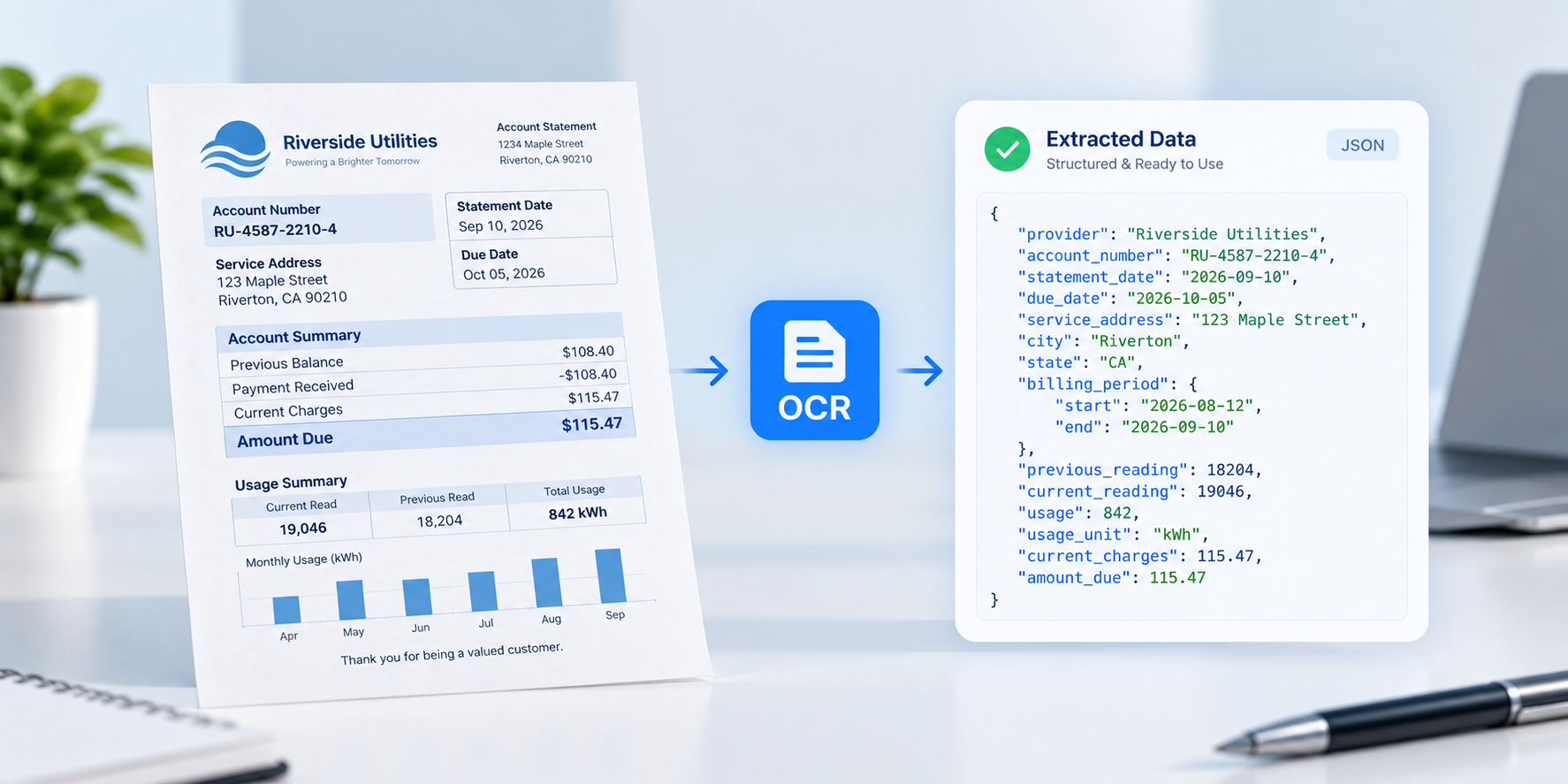
OCR, or optical character recognition, converts visible characters in a scanned document or image into machine-readable text.
For utility bills, however, recognizing text is only the first step. A useful production workflow also needs to understand which text represents:
- the account number
- billing dates
- meter readings
- usage
- rates
- line-item charges
- payments and credits
- current charges
- amount due
OCR vs Parsing vs Validation vs Document AI
| Stage | Question It Answers |
|---|---|
| OCR | What characters are visible? |
| Classification | What type of document is this? |
| Field extraction | Which text is the account number, usage or amount due? |
| Parsing | How should those values be normalized? |
| Validation | Do the extracted values agree with each other? |
| Document AI | How do classification, OCR, extraction, tables and validation work together? |
Why Use Fictional Utility Bills for OCR Testing?
Real utility bills can contain sensitive personal and account information. A QA team usually does not need real customer data to test:
- OCR recognition
- layout handling
- date normalization
- currency parsing
- meter calculations
- table extraction
- multi-page relationships
- error handling
Safer Test Fixtures
Use invented names, addresses, account numbers, meter IDs and providers.
Known Expected Values
Synthetic bills make it easy to define exact ground truth before running OCR.
Utility Bill OCR Test Matrix
| Test Case | What It Tests | Difficulty |
|---|---|---|
| Digital PDF | Baseline extraction | Easy |
| Scanned PDF | True OCR from pixels | Medium |
| JPG / PNG | Image-based OCR | Medium |
| Phone photograph | Perspective and lighting | Medium |
| 3° skew | Alignment robustness | Medium |
| 90° rotation | Orientation detection | Hard |
| Low contrast | Faint text recognition | Hard |
| JPEG compression | Artifact tolerance | Medium |
| Blur | Character recognition under image degradation | Hard |
| Shadow / glare | Mobile-capture robustness | Hard |
| Multi-page statement | Page association | Hard |
| Multiple meters | Repeated structured objects | Hard |
| Table-heavy bill | Rows, columns and relationships | Hard |
| Negative credits | Sign preservation | Medium |
| Missing optional field | Null and fallback handling | Medium |
Different Utility Bills Create Different OCR Challenges
| Utility Type | Important Fields | Common Challenge |
|---|---|---|
| Electricity | Meter readings, kWh, tariff, supply, delivery, demand | Usage and rate tables |
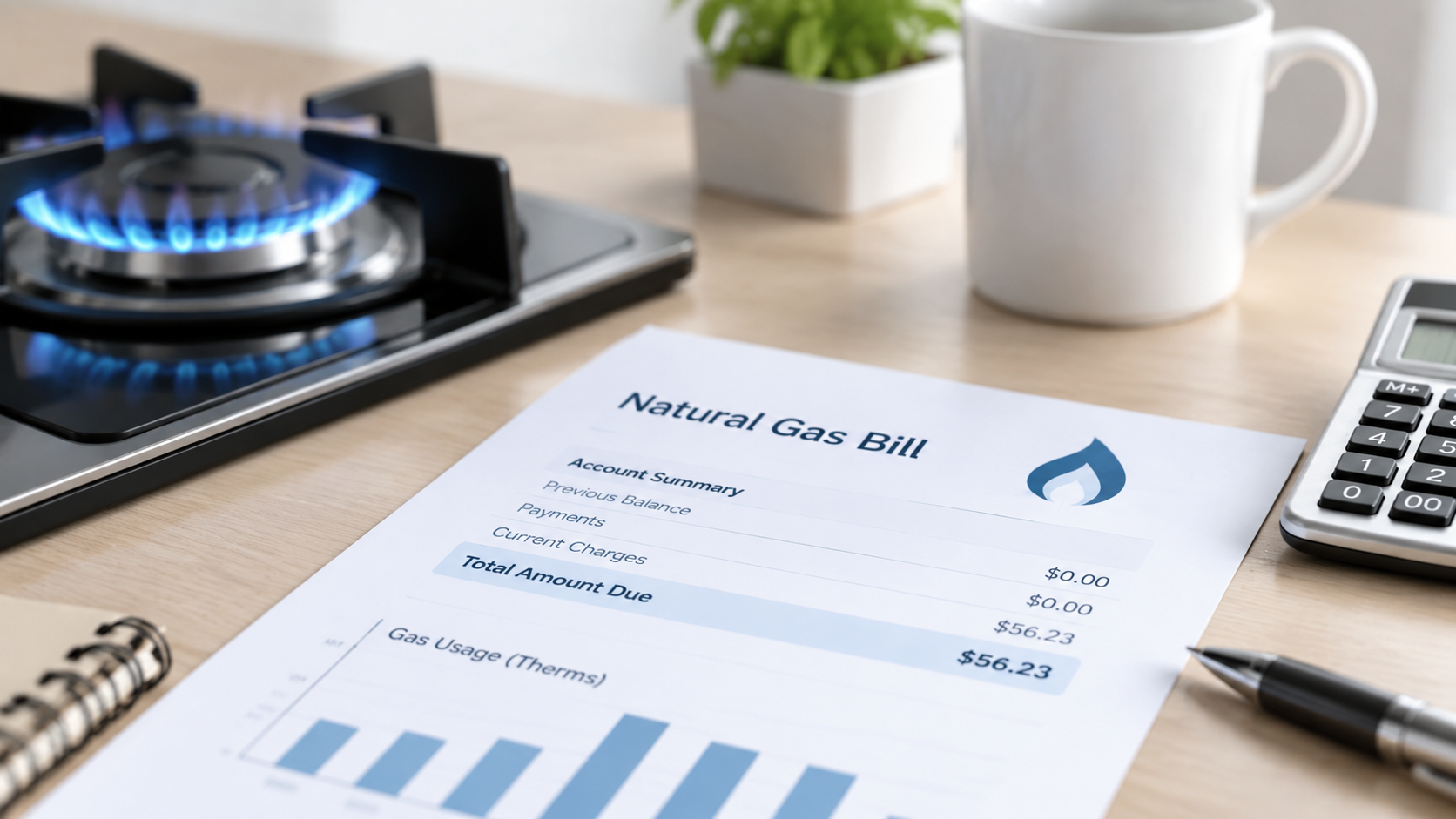
| Gas | CCF, therms, meter readings, conversion factor | Unit conversion |
| Water | Meter reads, gallons/CCF, sewer, stormwater | Multiple service categories |
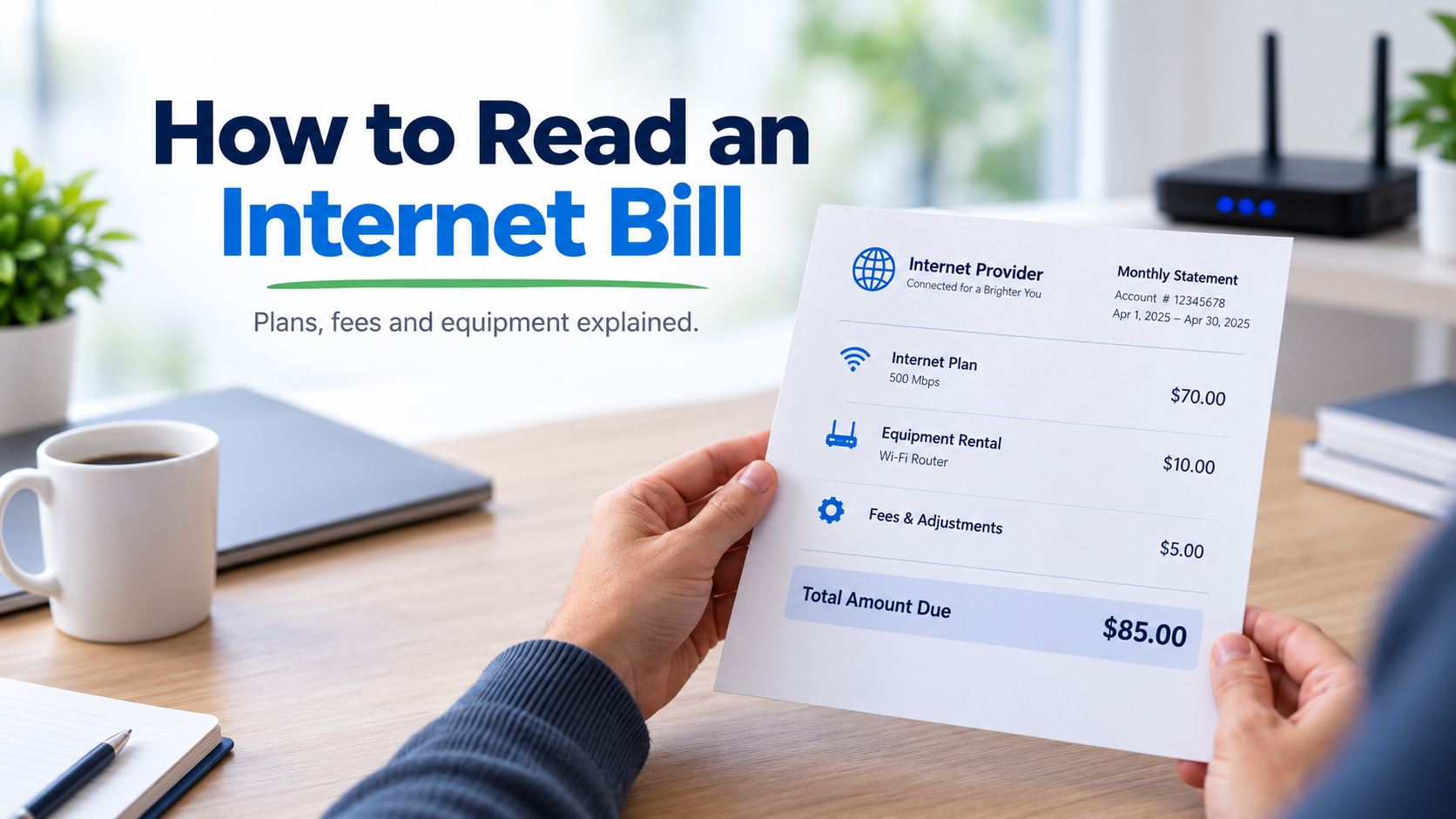
| Internet | Plan, promotion, equipment, fees | Temporary discounts |
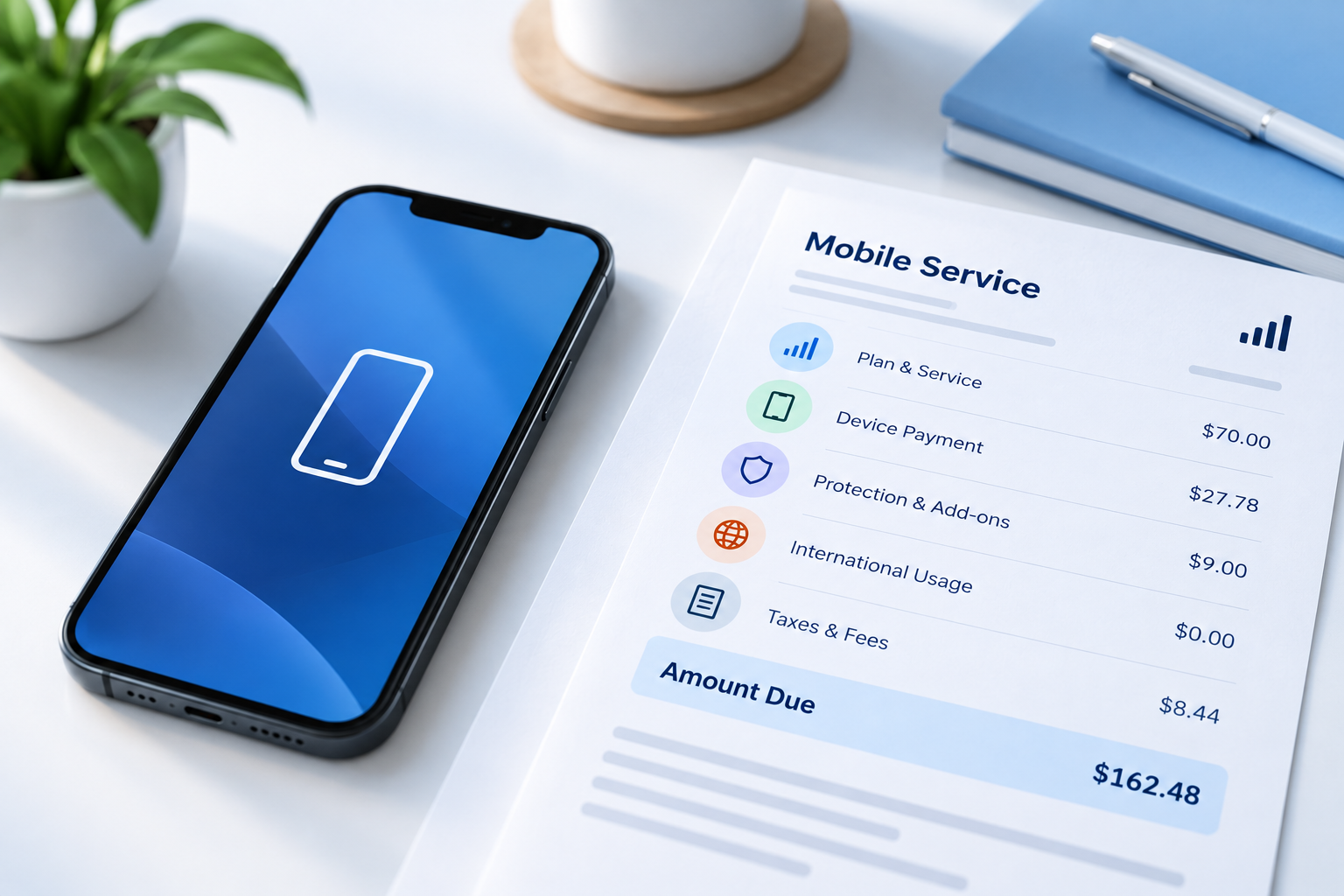
| Mobile | Account charges, lines, devices, promo credits | Nested line-level data |
| Cable / telecom | Internet, TV, equipment, proration, fees | Multi-page charge structure |
Electricity OCR Test Case
Clean Digital Electricity Bill
Use this as the baseline before testing degraded scans or photos.
| Field | Expected Value |
|---|---|
| Account number | SAMPLE-5724-1840 |
| Previous reading | 18,204 |
| Current reading | 19,046 |
| Usage | 842 kWh |
| Current charges | $115.47 |
| Amount due | $115.47 |
Gas Bill OCR Test Case
Gas Unit Conversion Test
| Field | Expected Value |
|---|---|
| Previous meter | 8,420 |
| Current meter | 8,490 |
| Meter volume | 70 CCF |
| Illustrative billing factor | 1.037 therms/CCF |
| Therms | 72.59 |
| Amount due | $90.06 |
Water Bill OCR Test Case
Water + Sewer Table Extraction
| Field | Expected Value |
|---|---|
| Previous meter | 12,420 |
| Current meter | 12,428 |
| Water usage | 8 CCF |
| Approximate gallons | 5,984 |
| Water charges | $41.50 |
| Wastewater charges | $35.20 |
| Other fees | $5.00 |
| Total | $81.70 |
This case tests whether water, wastewater and other charges remain separate rather than being flattened into one unstructured text block.
Internet & Telecom OCR Test Case
Multi-Page Internet / TV Statement
Use a multi-page fictional statement where:
- Page 1 contains the account summary.
- Page 2 contains internet charges.
- Page 3 contains TV/equipment charges.
- Page 4 contains taxes and fees.
What Fields Should Utility Bill OCR Extract?
For field definitions and statement structure before building an OCR schema, review what a utility bill is, what a utility bill looks like, utility bill account summary fields and the utility bill terms and abbreviations glossary.
| Field Group | Examples |
|---|---|
| Document | document type, provider, utility type |
| Customer | customer name, service address, billing address |
| Account | account number, customer ID |
| Dates | statement date, due date, billing-period start/end |
| Meter | meter ID, previous read, current read, reading status |
| Usage | quantity, unit, average daily use |
| Rates | tariff, unit rate, billing factor |
| Charges | supply, delivery, taxes, fees, adjustments |
| Account activity | previous balance, payment, credits |
| Total | current charges, amount due |
Ground Truth: Define the Correct Answer Before Running OCR
A useful OCR benchmark needs a known expected result. That expected result is commonly called ground truth.
Expected ground truth
{
  "case_id": "ELEC-CLEAN-001",
  "document_type": "utility_bill",
  "service_type": "electricity",
  "provider": "Crestline Electric Services - Fictional",
  "account_number": "SAMPLE-5724-1840",
  "statement_date": "2026-09-17",
  "due_date": "2026-10-05",
  "billing_period": {
    "start": "2026-08-12",
    "end": "2026-09-10"
  },
  "meter": {
    "meter_id": "CE-410582",
    "previous_reading": 18204,
    "current_reading": 19046,
    "usage": 842,
    "unit": "kWh",
    "reading_status": "actual"
  },
  "current_charges": 115.47,
  "amount_due": 115.47
}Map Extracted Values Back to the Source
For layout-aware extraction, store each value with its page number and bounding box coordinates where the OCR engine provides them. Also record the engine's confidence score when available. Confidence should not replace validation, but it can help identify low-certainty fields that deserve manual review or a second extraction pass.
Field-level source evidence makes OCR debugging much easier. Instead of storing only a value, also record where that value appeared.
{
  "amount_due": {
    "value": 115.47,
    "page": 1,
    "region": "account_summary",
    "source_text": "$115.47"
  }
}
A production system may use coordinates, page numbers, table-cell references or other evidence metadata.
Compare OCR Output Against Ground Truth
Expected
{
  "account_number": "SAMPLE-5724-1840",
  "usage": 842,
  "amount_due": 115.47
}
OCR output
{
  "account_number": "SAMPLE-5724-1840",
  "usage": 842,
  "amount_due": 115.74
}How to Measure Utility Bill OCR Accuracy
Do not measure only correctly extracted values. Track false positives, where the system returns a field or value that should not exist, and false negatives, where a required field is present on the document but is not extracted. These error types are especially important for optional fees, secondary meters, credits and multi-page line items.
Exact Field Accuracy
How many expected fields match the normalized ground truth exactly?
Field Recall
How many expected fields were extracted at all?
Numeric Accuracy
How close are extracted balances, usage figures and rates to expected values?
1. Exact Match Accuracy
2. Field Recall
3. Numeric Error
4. Critical-Field Accuracy
Consider reporting a separate score for fields that matter most to the workflow:
- account number
- billing period
- meter usage
- amount due
- service address where legitimately required
Common Utility Bill OCR Failure Modes
Character Confusion
8 becomes B
0 becomes O
Decimal Loss
115.47 becomes 11547
Sign Loss
-$20.00 becomes $20.00
Unit Confusion
kW is mistaken for kWh
Field Swap
Previous meter reading is assigned to current reading.
Wrong Table Row
A rate is attached to the wrong usage tier.
Page Association Error
Page 2 charges are assigned to the wrong account or service.
Date Ambiguity
03/04/2026 may be interpreted incorrectly.
Multi-Meter Overwrite
Meter B replaces Meter A instead of creating a second object.
Missing Null Handling
An absent field is guessed rather than returned as null or unavailable.
Utility-Specific Validation Rules
Validation can combine business rules with simple pattern checks. For example, regex rules can flag malformed dates, account-number formats, currency values or meter identifiers before the data is accepted. If extraction is performed through an API, test both the OCR result and the API response schema, status handling, null values and field types.
OCR confidence alone does not prove the extracted values are correct. Utility-bill math creates additional checks.
Electricity Meter Validation
Gas Conversion Validation
Account Reconciliation
Date Validation
- billing-period end should not precede the start
- date parsing should use a consistent normalized format
- ambiguous day/month formats should be handled carefully
Line-Item Validation
Test Bills With Multiple Meters
Commercial and complex utility statements can contain more than one meter. Your schema should preserve each meter separately.
Correct structure
{
  "meters": [
    {
      "meter_id": "A-101",
      "usage": 842,
      "unit": "kWh"
    },
    {
      "meter_id": "B-202",
      "usage": 411,
      "unit": "kWh"
    }
  ]
}
Problematic flattened structure
{
  "usage": 411
}Multi-Page Utility Bill OCR Testing
| Page | Fictional Content |
|---|---|
| Page 1 | Account summary and amount due |
| Page 2 | Meter readings and usage |
| Page 3 | Rate / tariff details |
| Page 4 | Taxes, fees and messages |
Validate that the parser:
- keeps all pages under one document
- does not duplicate the account total
- links detail pages to the correct account
- preserves page numbers or source references
Utility Bill Table Extraction Testing
Recognizing the words inside a table is not enough. The parser should preserve their relationships.
| Usage Tier | Usage | Rate | Charge |
|---|---|---|---|
| Tier 1 | 500 kWh | $0.080 | $40.00 |
| Tier 2 | 342 kWh | $0.080 | $27.36 |
Document Quality Stress Tests
Image quality should be part of the test matrix, not treated as a single clean-input assumption. Include multiple resolution levels and DPI values, then test blur, rotation, skew, low contrast, compression and cropping. A separate preprocessing step may deskew, denoise, sharpen, normalize contrast or resize the image before OCR, so record whether accuracy is measured before or after preprocessing.
| Defect | Example Test | What to Measure |
|---|---|---|
| Skew | Rotate by 3° | Field and table retention |
| Rotation | 90° page rotation | Orientation detection |
| Compression | Low-quality JPEG | Small-text accuracy |
| Blur | Slight motion blur | Digit recognition |
| Low contrast | Gray text on off-white | Faint character recall |
| Shadow | Phone-photo shadow | Regional robustness |
| Perspective | Angled phone capture | Layout recovery |
| Crop | Partially missing edge | Missing-field handling |
Create OCR Difficulty Levels
Level 1: Clean
Digital PDF with clear text and simple structure.
Level 2: Realistic
Scan with mild skew, compression or light noise.
Level 3: Difficult
Phone photo with perspective, shadows or blur.
Level 4: Structural
Tables, several pages or multiple meters.
Level 5: Adversarial QA
Missing fields, unusual credits, ambiguous dates and OCR-like character substitutions.
Create a Dataset Manifest
Treat the manifest as the index for the complete test dataset. Each record should identify the source file, utility type, difficulty level, expected fields, ground-truth version and any transformation applied to the document. This makes failed cases reproducible and helps prevent silent changes to the evaluation set.
A manifest helps the QA team understand exactly what each fixture is designed to test.
{
  "case_id": "ELEC-SCAN-002",
  "utility_type": "electricity",
  "input_format": "jpg",
  "difficulty": "medium",
  "defects": [
    "3_degree_skew",
    "jpeg_compression"
  ],
  "input_file": "ELEC-SCAN-002.jpg",
  "ground_truth_file": "ELEC-SCAN-002.json"
}
Useful Test Case Naming
ELEC-CLEAN-001ELEC-SCAN-002GAS-CONVERSION-001WATER-TABLE-001ELEC-MULTIMETER-001TELCO-MULTIPAGE-001
Use a Golden Dataset for OCR Regression Testing
Once a parser performs correctly on an approved test set, keep those fixtures as a versioned golden dataset.
Rerun the same tests whenever you change:
- OCR provider
- document-AI model
- prompt or extraction instructions
- field schema
- table parser
- normalization logic
- validation rules
| Metric | Version A | Version B |
|---|---|---|
| Exact field accuracy | 94% | 96% |
| Critical-field accuracy | 98% | 98% |
| Table accuracy | 88% | 95% |
| Hard-document accuracy | 79% | 90% |
Privacy & Safe Synthetic Utility Bill Data
Utility bills can contain sensitive data such as:
- customer names
- street addresses
- account numbers
- meter identifiers
- balances
- payment references
- QR or barcode data
Recommended Synthetic Markings
- FICTIONAL TEST DOCUMENT
- NOT AN OFFICIAL UTILITY BILL
- NOT FOR IDENTITY OR ADDRESS VERIFICATION
Interactive Utility Bill OCR QA Tools
Field Accuracy Calculator
Measure both exact-match accuracy and field recall.
Numeric Extraction Validator
Compare an expected billing value with the OCR result.
Utility Bill Math Validation Checker
Validate meter usage and account reconciliation at the same time.
Create Fictional Utility Bill Test Samples
When you need fictional documents for a controlled QA set, the online utility bill generator can provide customizable sample inputs without using a real customer's statement.
UtilityBillGenerator.net's generators can be used to create clearly fictional documents for legitimate development, OCR testing, training and UI/UX demonstrations.
Electricity Sample
Useful for meter readings, kWh, rates, supply/delivery and account totals.
Create an Electricity Test SampleInternet / Mobile Sample
Useful for plans, equipment, line-level charges and promotional credits.
Create a Telecom Test SampleSpectrum-Style Sample
Useful for multi-page telecom layouts, proration and account-summary testing.
Create a Spectrum-Style Test SampleBuild a Fictional OCR Test Fixture
For repeatable synthetic-document QA, you can also create fictional utility bill samples online and vary fields, values and document types across test cases.
Start with clearly fictional bill data, save the expected values as ground truth, then test OCR against clean and degraded versions of the same document.
Create a Fictional Utility Bill SampleRelated Utility Bill Guides
Use the service-specific reading guides when defining expected fields for different document classes: electricity bills, gas bills, water bills, internet bills and mobile phone bills.
Frequently Asked Questions
What is utility bill OCR?
Utility bill OCR uses optical character recognition to turn text visible on a bill image or scan into machine-readable text. A complete document-processing system may then extract, normalize and validate billing fields.
What is the difference between OCR and utility bill parsing?
OCR recognizes characters. Parsing identifies what those characters represent and converts them into structured fields such as account number, usage and amount due.
What is ground truth in OCR testing?
Ground truth is the known correct output used to evaluate OCR or extraction results. It should be defined before the test is scored.
Which fields should utility bill OCR extract?
Common fields include provider, account number, billing period, statement date, due date, service address, meter readings, usage, rates, charges, payments and amount due.
How do you measure utility bill OCR accuracy?
Useful metrics include exact field accuracy, field recall, numeric accuracy, critical-field accuracy and table-structure accuracy.
Why should OCR tests include scanned documents?
A digital PDF may already contain embedded text. A scan forces the OCR system to recognize characters from image pixels, which is closer to many real document-processing workflows.
Why test utility bills with skew and blur?
Phone photos and scans can be rotated, blurred, compressed or poorly lit. Stress tests reveal whether OCR quality degrades under those conditions.
How do I test multi-page utility bills?
Create fixtures where different pages contain the account summary, meter data, service details and taxes. Then verify that all pages remain associated with the correct document.
How do I test utility bills with multiple meters?
Store each meter as a separate structured object and verify that one meter does not overwrite another.
What is OCR regression testing?
Regression testing reruns an approved set of documents after a model, OCR provider, prompt, schema or parser changes to identify improvements or new failures.
Should I use real customer utility bills for OCR QA?
Not when fictional test data can test the same behavior. Utility bills can contain personal addresses, account identifiers and other sensitive information.
Can a fictional utility bill be used as proof of address?
No. A fictional test bill is not issued by a real utility and cannot verify residence, identity, service or account ownership.
Where can I create fictional utility bills for OCR testing?
UtilityBillGenerator.net provides fictional sample generators for electricity, gas, internet/mobile and Spectrum-style telecom test documents.
Editorial & Technical References
The testing framework in this article was informed by current public utility-document extraction and OCR resources.
- Parsepoint: Utility Bill OCR & Data Extraction
- Affinda: Utility Bill Document Processing
- Invofox: Utility Bill OCR & Parsing
- Airparser: Parsing Utility Bills Into Structured Data
- UtilityBillOCR: Utility Bill Data Extraction
Actual extraction schemas, confidence models, validation logic and supported document types differ between OCR and document-AI systems.